
Fraudulent applications are becoming more sophisticated, and screening now requires more than just reviewing uploaded documents.
Over the past few years, fraudulent rental applications have become increasingly sophisticated. What used to be easier to spot through obvious inconsistencies or poorly edited documents has evolved into something far more convincing.
With the rise of AI tools and advanced editing software, fake pay stubs, altered bank statements, edited IDs, and fabricated employment information can now appear highly professional at first glance. In many cases, the documents themselves are no longer the biggest red flag.
Fraudulent Documents Are More Accessible Than Ever
A quick search on social media platforms can reveal just how accessible fraudulent documents have become. Fake pay stubs, altered bank statements, and even counterfeit IDs are openly advertised online.
At the same time, AI-generated content has made fraudulent applications cleaner, more polished, and more internally consistent than they were just a few years ago. Information across documents often appears to match, which makes deeper verification increasingly important.
That doesn’t mean every application is fraudulent, of course, but it does mean that screening today requires much more than simply collecting uploaded documents and running a basic credit report.
Why “Looks Real” Is No Longer Enough
In the past, fraudulent applications were often easier to identify. Documents might contain spelling errors, inconsistent formatting, or obvious editing marks.
Today, many fake documents appear professional and convincing at first glance. Some include realistic payroll layouts, matching tax calculations, believable employer information, and even fabricated websites or phone numbers.
Because of this, modern screening is no longer just about whether a document looks legitimate. It’s about whether the information can be independently verified.
What 901RES Is Doing Differently
At 901 Real Estate Services, we’ve continued expanding our verification process in response to these industry changes.
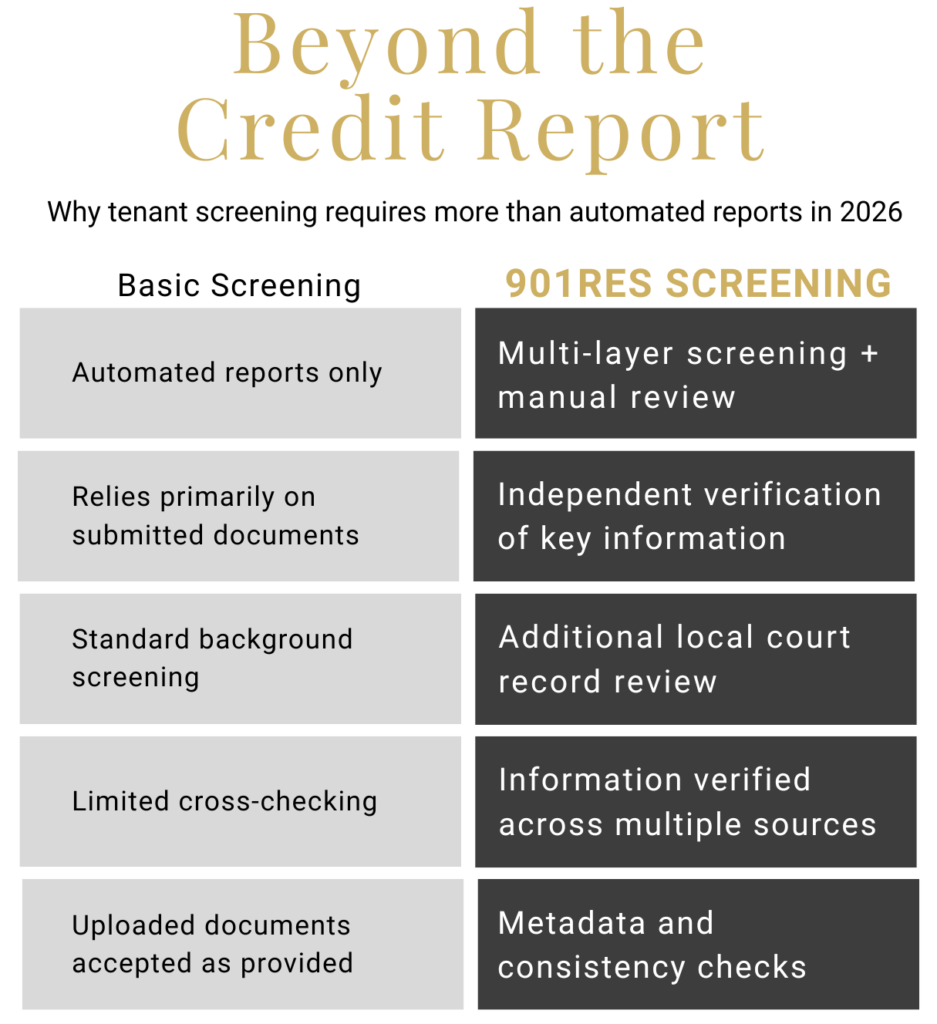
In addition to traditional screening methods like credit, criminal, income, and rental history checks, our team also performs deeper verification when something appears inconsistent or requires additional review.
That may include:
- Reviewing PDF metadata and document inconsistencies
- Researching employers and verifying company legitimacy
- Matching phone numbers and email addresses against publicly available business information
- Reviewing whether contact numbers appear to be VoIP or temporary numbers
- Checking driver license status and validity through state databases where available
- Reviewing Shelby County court records for recent filings that may not yet appear on traditional screening reports
- Comparing information across multiple documents and sources for consistency
Over time, thorough screening also helps protect the reputation of both our company and the properties we manage.
When fraudulent applications are consistently identified and declined, word tends to spread that 901RES goes the extra mile during the verification process. That helps discourage some bad actors from applying in the first place and reinforces that our properties are professionally managed and occupied by qualified residents.
In many cases, screening today involves connecting multiple small details rather than relying on a single document or report.
Why Thorough Screening Matters to Owners
A fraudulent application can create significant financial risk for property owners.
Missed rent payments, eviction costs, property damage, legal expenses, and extended vacancy can all stem from placing an unqualified tenant based on inaccurate or falsified information.
Thorough screening helps reduce those risks before a lease is ever signed.
At the same time, careful screening also benefits qualified applicants and current residents. Our goal is not simply to keep fraudulent applications out of our properties, but also to help ensure housing opportunities go to applicants who genuinely qualify.
Everyone deserves safe and stable housing, and maintaining a fair, thorough screening process helps protect the integrity of that process for all applicants. When fraudulent or intentionally misleading applications are approved, it can ultimately impact qualified renters who are applying honestly and responsibly.
While no screening process can eliminate risk entirely, taking the time to verify information carefully helps protect both our owners and residents in the long run.
Technology Cuts Both Ways
Interestingly, many of the same technological changes contributing to fraudulent applications are also helping property managers strengthen verification processes.
Advanced screening tools, metadata analysis, fraud detection software, and better data cross-referencing all help identify inconsistencies that might otherwise go unnoticed.
Technology is changing the rental industry quickly, and screening practices have had to evolve alongside it.
The Big Picture
At the end of the day, our goal is not to make the application process more difficult for qualified renters.
Our goal is to place responsible, qualified tenants while helping protect our owners from unnecessary financial and legal risk.
As fraudulent applications become more sophisticated, we believe careful verification, strong processes, and attention to detail matter more than ever.
Behind the Scenes at 901
In late April, Kendall attended the National Association of Residential Property Managers’ annual Broker/Owner Conference in New Orleans. Kendall attends this conference each year as part of our ongoing commitment to continuing education, professional development, and staying informed about changes within the property management industry.
The conference brings together property management professionals from across the country to discuss evolving market conditions, operational best practices, legal and compliance updates, new technology, and emerging industry trends. This year’s sessions included topics ranging from AI and fraud prevention to leasing strategy, maintenance operations, software developments, and resident experience.
In addition to attending educational sessions, Kendall spent time networking with other property managers and industry leaders to exchange ideas and learn how companies in other markets are adapting to changes in the industry. Kendall is also a member of Crane, a national, community-driven network focused on collaboration, education, and strategic connections within the property management space. Crane hosted a private jazz cruise event for members during the conference, creating another opportunity for operators across the country to connect and share ideas.
While Memphis is its own unique rental market, staying connected to property managers nationwide helps us continue refining our systems, evaluating new technology, and bringing strong operational ideas back to our owners and residents here at home.