2026 Memphis & National Rental Market Update
Clear Data, Honest Perspective, and Thoughtful Guidance
As we move into early 2026, rental market headlines can feel inconsistent and, at times, confusing. Some commentary suggests conditions remain tight, while other reports point to slowing rent growth, rising vacancy, and increased competition. Rather than relying on sound bites or overly optimistic narratives, our goal is to help you understand what the data actually shows — and how to use it to make informed, strategic decisions for your property.
This market update was compiled in-house by the 901 Real Estate Services team, drawing from federal and national housing data alongside real-time leasing performance, tenant feedback, and owner conversations across the Memphis market. The purpose is clarity, context, and guidance you can trust.
National Rental Market: Growth Has Slowed, Competition Has Increased
Across the U.S., rental markets are no longer experiencing the rapid rent growth seen in prior years. Multiple national sources point to a clear moderation trend.
National indicators show:
- Single-family rent growth largely stalled in 2025, with annual growth below 1%.
- Typical U.S. asking rents declined slightly month over month toward the end of the year, with only modest year-over-year gains.
- Nearly 40% of rental listings nationally offered concessions, signaling increased competition among landlords.
Together, these signals point to a more balanced market — one where renters have options and pricing accuracy matters more than momentum.
What Forecasts Suggest Moving Forward
Looking ahead, most forecasts indicate that this moderation is likely to continue through 2026.
Forward-looking projections suggest:
- Rent-related inflation is expected to continue easing.
- Single-family rent growth is projected to remain modest nationwide.
- Multifamily housing is expected to face additional pressure from new supply and softer demand.
In many markets, increased multifamily competition spills over into the single-family rental space, giving tenants more choices across property types and price points.
Leasing Conditions: Demand Is Softer, Execution Matters More
Recent leasing data reinforces what broader market trends suggest: renter demand has softened, but outcomes are increasingly shaped by execution.
According to Q4 2026 leasing data from RentEngine:
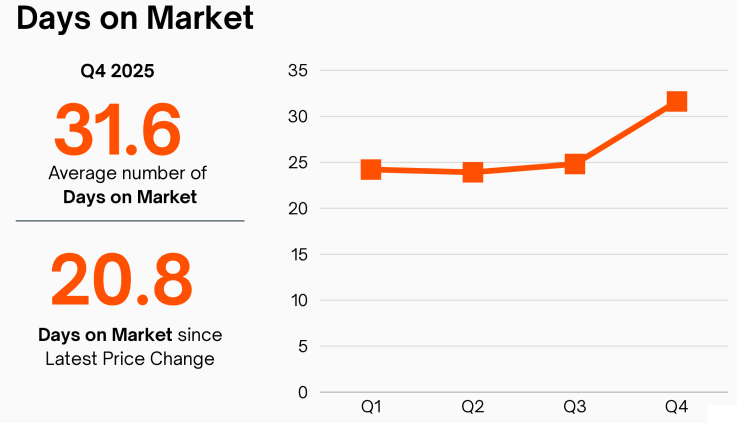
- Average Days on Market increased to just over 31 days in Q4 2025.
- After a price correction, average Days on Market dropped to approximately 21 days, highlighting the impact of timely pricing adjustments.
- Even with fewer leads overall, leasing conversion rates improved quarter over quarter, indicating that teams who adapted performed better than the market overall.
This reinforces an important theme we’re seeing across markets: fewer leads does not automatically mean worse outcomes, but it does raise the importance of pricing accuracy, responsiveness, and speed.
Source: RentEngine
Memphis Market Conditions: Local Data Tells the Real Story
While national trends provide context, local conditions ultimately shape leasing outcomes. In Memphis, the latest data continues to point to a market that is softer than many generalized narratives suggest.
Memphis rental market conditions can be summarized as:
- Elevated vacancy
- Moderate to slow rent growth
- Increased competition among landlords
- A tenant-competitive environment
These conditions directly influence pricing strategy, leasing timelines, and renewal decisions.
Federal Vacancy Data: A Key Signal in Memphis
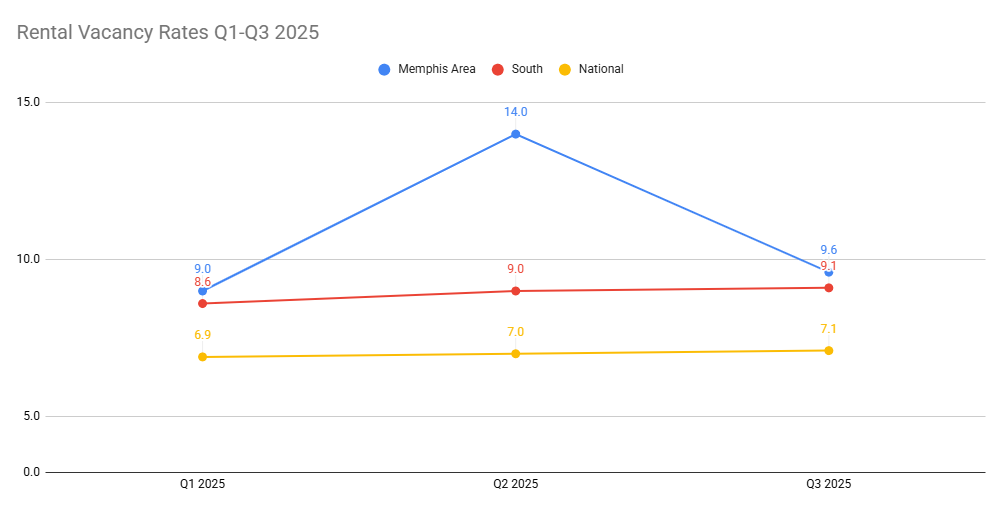
Federal data provides one of the clearest indicators of overall market balance. Historically, rental vacancy rates in the Southern U.S. tend to run higher than the national average, and current data reflects that pattern. In Q3 2025, rental vacancy across the South measured 9.1%, compared to 7.1% nationally.
Within the Memphis metro area (TN–AR–MS), vacancy was elevated throughout 2025, ranging from 9.0% in Q1 to a high of 14.0% in Q2. By Q3, vacancy declined to 9.6%, bringing Memphis much closer to the broader Southern average.
While these levels remain above what would typically be considered a “tight” rental market, the large quarter-to-quarter swings point to ongoing supply-and-demand imbalance rather than steady absorption. Federal Reserve data reinforces this picture, showing that while vacancy has risen nationally since 2022, Memphis continues to track above the U.S. average.
Sources: U.S. Census Bureau, Federal Reserve Bank of St. Louis
Rent Trends Support the Vacancy Data
Rent behavior in Memphis aligns closely with what vacancy data indicates.
Recent Memphis rent indicators:
- Typical rent: ~$1,401
- Month-over-month change: –0.3%
- Year-over-year growth: ~1.9%
Rent growth remains positive, but muted, and concessions are more common — particularly for older or less-differentiated inventory.
What This Means for Property Owners
When viewed together, the data tells a consistent story:
- Memphis has experienced elevated rental vacancy for several years.
- 2025 vacancy ranged roughly 9%–14%, well above national averages.
- The market is no longer landlord-dominant.
In this environment, outcomes depend less on waiting for market momentum and more on thoughtful execution.
Where Strategy Makes the Difference
In a tenant-competitive market, successful leasing depends on:
- Accurate pricing from the start
- Property condition and readiness
- Willingness to adjust based on real market feedback
- A proactive approach to renewals and tenant retention
Recent leasing data underscores this point: nearly 60% of listings required at least one price reduction, with delayed adjustments often adding meaningful vacancy time and lost rent.
This is why we rely on agent-led showings, consistent feedback loops, and objective data when advising owners — not assumptions or industry hype.
Our Commitment to You
We’ll be candid — this isn’t the data any of us wish we were sharing. But our commitment to our owners has always been transparency, not overly optimistic headlines or selective storytelling. We believe knowledgeable owners make better decisions, especially in shifting markets.
As conditions evolve, we continue to closely track both national and local trends, while also listening carefully to the feedback we hear every day from owners, tenants, and prospective renters. That real-time insight helps guide our recommendations, whether that’s pricing strategy, suggested property updates, renewal planning, or marketing adjustments.
Our role is not just to react to the market, but to help you navigate it thoughtfully and proactively, with clarity, confidence, and a long-term view toward success.
Sources:
- Zillow: CPI Shelter Forecast, December 2025; Rent Report, December 2025; Rents Pull Back and Concessions Rise
- Apartment List: National Rent Report January 2026
- Buildium: Rental Market Predictions for 2026
- Federal Reserve Bank (FRED) of St. Louis: Rental Vacancy Rates
- Rental Housing Journal: Multifamily Will Be Tested In 2026
- RentEngine: Q4 2025 Leasing Report
- Rentometer: 2025 Annual Single-Family Rentals Report
- U.S. Census Bureau: Housing Vacancy Survey (HVS), Vacancy Rates